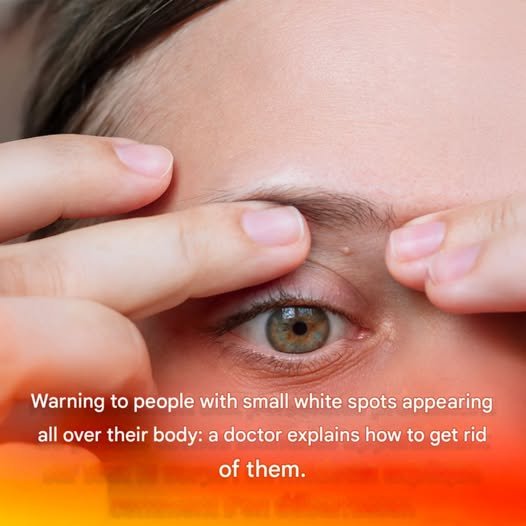
If you’re seeing small white spots appearing all over your body, it’s important not to panic—this is actually a common skin issue with several possible causes. A doctor would first try to identify what type of spots they are, because treatment depends entirely on the cause.
Here’s a clear, doctor-style explanation 👇
⚠️ What those white spots could be
1. Fungal infection (very common) – Tinea versicolor
- Caused by yeast that naturally lives on your skin but overgrows
- Appears as small white, light, or pink patches on chest, back, arms, or neck
- May be slightly itchy or dry
👉 This is especially common in hot, humid climates or if you sweat a lot (Healthline)
✔️ Good news:
- Not dangerous or contagious
- Usually easy to treat
2. Vitiligo (autoimmune condition)
- Skin loses pigment → milky white patches
- Often affects face, hands, feet, or genitals
- Can slowly spread over time
👉 Happens when the immune system attacks pigment cells (Cleveland Clinic)
✔️ Not harmful physically, but requires medical diagnosis
3. Sun-related white spots (Idiopathic guttate hypomelanosis)
- Small white dots on arms/legs
- Caused by sun damage and aging
- Completely harmless
4. Pityriasis alba (linked to dry skin/eczema)
- Light patches, often on the face
- Common in children/teens
- Skin may be dry or slightly flaky
5. Other less common causes
- Milia (tiny white bumps)
- Post-skin injury or irritation
- Nutritional deficiencies (e.g., vitamin B12) (Healthline)
🩺 How doctors treat it (depends on cause)
If it’s fungal (most likely in many cases):
- Antifungal creams or shampoos
- Sometimes oral medication
- Usually clears in a few weeks
👉 These treatments target yeast overgrowth (NCBI)
If it’s vitiligo:
- No permanent cure, but treatments include:
- Steroid creams
- Light therapy
- Immune-modulating treatments
General care tips:
- Use gentle skincare products
- Avoid harsh chemicals
- Wear sunscreen (prevents contrast from worsening)
- Keep skin moisturized (Healthline)
🚨 When you should see a doctor
Go to a dermatologist if:
- Spots are spreading quickly
- They don’t improve after a few weeks
- You feel itching, pain, or discomfort
- You’re unsure what it is
Doctors may diagnose just by looking—or sometimes with a Wood’s lamp or skin test (American Academy of Dermatology)
⚡ Important takeaway
Most white spots are harmless and treatable, especially fungal ones.
But they can look similar, so self-diagnosing can be misleading—a proper checkup is the safest move.
If you want, you can describe your spots (location, itching, size, how long you’ve had them), and I can help you narrow down what it most likely is.