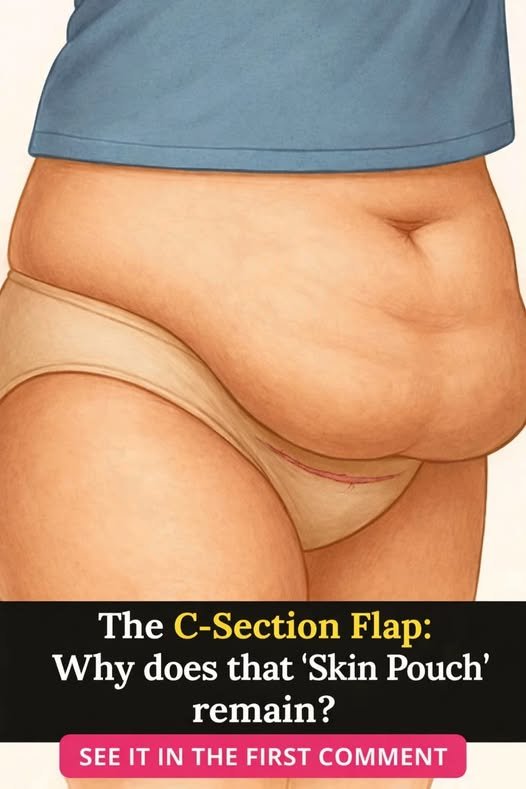
After a C-section, many women notice a small “pouch” or overhang of skin and fat just above the scar—often called a “C-section shelf” or flap. It’s very common and happens for understandable biological reasons, not because you did anything wrong.
🤰 What Is the C-Section Flap?
A C-section (Cesarean section) involves cutting through multiple layers—skin, fat, connective tissue, and the uterus. As your body heals, the area around the scar can change shape, creating that soft bulge.
🧬 Why Does That “Bag” of Skin Remain?
1. Scar Tissue Formation
Healing creates scar tissue, which is less flexible than normal skin. It can “pull inward” at the incision site, making the tissue above it appear to hang slightly.
2. Stretched Skin During Pregnancy
During pregnancy, skin expands significantly. After delivery, it doesn’t always snap back fully—especially if elasticity is reduced.
3. Fat Distribution Changes
Hormonal shifts can cause fat to settle in the lower abdomen, making the area above the scar more prominent.
4. Weakened Abdominal Muscles
Pregnancy can separate abdominal muscles (a condition called diastasis recti), reducing core support and contributing to a bulge.
5. Surgical Technique & Healing
- The way the incision is closed
- How your body heals
- Genetics
All influence how noticeable the flap becomes.
⚖️ Can It Go Away?
🟢 It May Improve With:
- Time: Healing and tissue remodeling can take months
- Exercise: Core-strengthening (especially deep core work)
- Healthy diet: Reducing overall body fat
- Postpartum physiotherapy
🔴 But It May Not Fully Disappear Because:
- Scar tissue is permanent
- Skin may remain loose
- Fat storage patterns can persist
🧘♀️ What Actually Helps
1. Gentle Core Rehab
Focus on deep core exercises (like pelvic tilts, heel slides, breathing work) rather than aggressive crunches early on.
2. Scar Massage
Once healed, gentle massage can improve tissue mobility and reduce the “pulling” effect.
3. Support Garments
Postpartum belts or high-waisted support wear can help with comfort and appearance.
4. Medical Options (If Desired)
- Laser or skin treatments for texture
- Surgery (tummy tuck) for significant cases
⚠️ Important Perspective
This isn’t a “flaw”—it’s a normal outcome of major abdominal surgery and pregnancy. The body prioritizes healing and function over cosmetic appearance.
🟡 Bottom Line
The C-section flap happens due to scar tissue, stretched skin, fat distribution, and muscle changes. It can improve over time, but in many cases, it won’t completely disappear—and that’s medically normal.
If you want, I can suggest a safe postpartum exercise routine or ways to tell if you have diastasis recti at home.