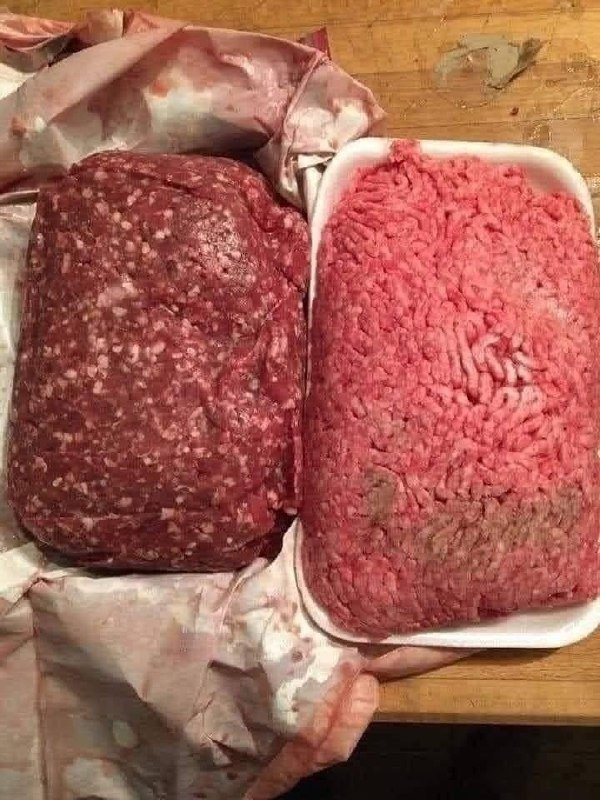
Yes, brown ground beef can be safe to eat, but there are some important details to understand. The color of ground beef does not always indicate spoilage—it’s often just a natural chemical reaction. Here’s the full explanation:
🔍 Why Ground Beef Turns Brown
1. Oxygen Exposure
- Fresh ground beef is usually bright red because of oxymyoglobin, the pigment formed when myoglobin (a muscle protein) reacts with oxygen.
- When meat is exposed to air for a while, the myoglobin oxidizes and turns brown or gray.
2. Packaging Effects
- Vacuum-sealed meat may appear purplish when first opened (due to lack of oxygen).
- Once exposed to air, it can quickly turn brown on the surface—this is normal.
3. Cooking or Freezing
- Freezing can cause slight browning in the interior.
- Slight browning does not mean the meat is unsafe; cooking will destroy bacteria if present.
✅ Signs Your Ground Beef Is Still Safe
- Smell: Fresh beef has a neutral, meaty smell. Sour or ammonia-like odors = spoilage.
- Texture: Should be firm and slightly moist. Slimy or sticky = bad.
- Expiration Date: Always check the “use by” or “sell by” date.
❌ When Brown Beef Is Unsafe
- If it has both a bad odor and slimy texture.
- If it’s past the expiration date or has been stored improperly (e.g., left at room temperature for more than 2 hours).
💡 Key Takeaway
- Color change alone does not mean your ground beef is unsafe.
- Smell and texture are better indicators of spoilage.
- Proper storage (refrigeration or freezing) and cooking are essential for safety.
If you want, I can also explain how to safely store and cook ground beef to maximize shelf life and reduce waste.