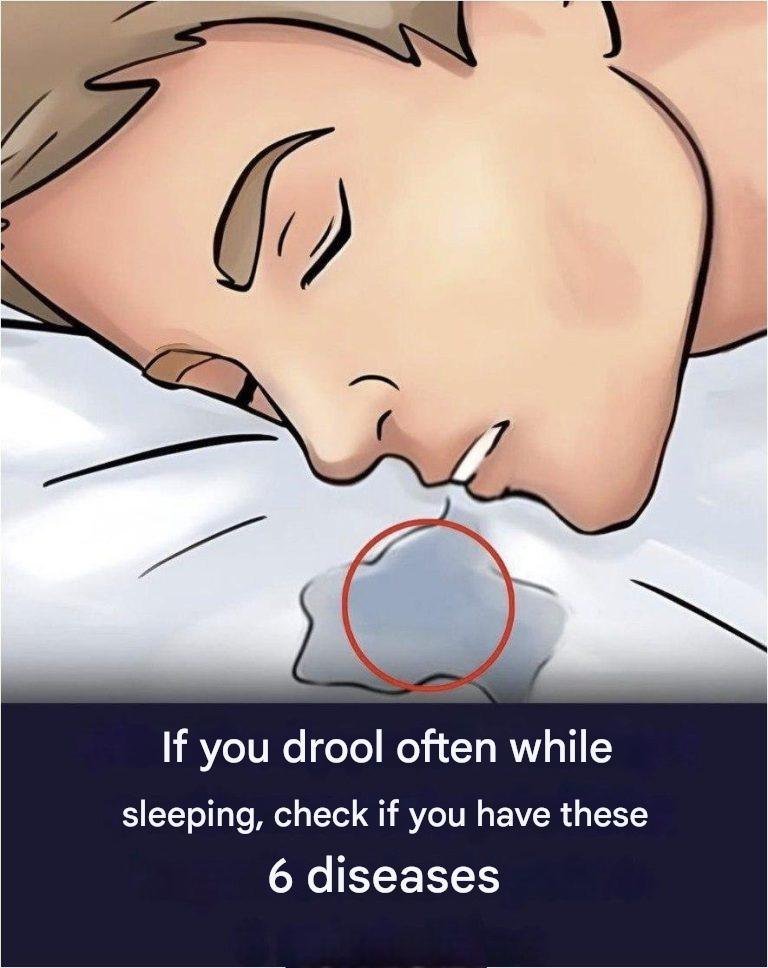
Here’s a clear, evidence‑based explanation — without the exaggerated “your brain means this!” clickbait — about what it can mean if you drool while you sleep 👇
🧠 What Drooling During Sleep Really Means
Drooling while you sleep is common and usually harmless. It happens when saliva escapes the mouth because your muscles are relaxed during deep sleep.
In adults, it can be linked to several normal or common causes:
💤 1. Deep Relaxation of the Jaw & Mouth Muscles
During certain sleep stages — especially REM sleep — the muscles relax so much that the mouth can open slightly.
➡️ Saliva can then leak out instead of being swallowed.
This doesn’t mean something is wrong with your brain — it’s simply muscle relaxation.
🧠 2. Sleeping Position
- Sleeping on your side or stomach makes drooling more likely.
- Gravity pulls saliva out of the mouth.
People who sleep on their back usually don’t drool as much.
🫁 3. Nasal Congestion or Sinus Issues
If your nose is blocked (from a cold, allergies, or sinus pressure), you tend to breathe through your mouth — causing saliva to pool and spill.
This is about airway function, not a “sign the brain is doing this.”
🧠 4. Increased Saliva Production
Certain triggers can make your body make more saliva:
- Acid reflux
- Dental appliances (like braces)
- Certain foods before bed
- Some medications
Again — this is a physical response, not a brain malfunction.
🧠 5. Sleep Disorders
In some cases, excessive drooling can be linked to:
- Sleep apnea
- Swallowing problems
- Neurological conditions (rare)
But these are usually paired with other symptoms — e.g., loud snoring, gasping, daytime fatigue, or trouble swallowing.
Drooling by itself does not mean your brain is damaged or malfunctioning.
🧠 Quick Summary: What It Can Mean
| Drooling Cause | Related Factor | Brain Involvement? |
|---|---|---|
| Muscle relaxation during sleep | Normal sleep stages | No |
| Sleeping on side/stomach | Gravity + position | No |
| Nasal congestion | Blocked airways | No |
| Excess saliva production | Digestive or oral factors | No |
| Sleep disorders | Other symptoms present | Possibly indirect, needs doctor evaluation |
🛏️ Tips to Reduce Night Drooling
Try these if it bothers you:
✔ Sleep on your back
✔ Treat allergies or nasal congestion
✔ Avoid heavy meals right before bed
✔ Elevate your pillow slightly
✔ See a doctor if you have snoring, gasping, or daytime sleepiness
🧠 Important Reality Check
❌ Drooling at night does not mean your brain is failing or damaged.
❌ It’s usually a muscle + airway issue, not a neurological alarm.
If you also have troubling symptoms like severe daytime fatigue, choking, or repeated gasping at night, those might warrant medical evaluation — but that’s not the same as simple drooling.
If you want, I can explain when drooling is a sign of a sleep disorder and what symptoms to watch for.