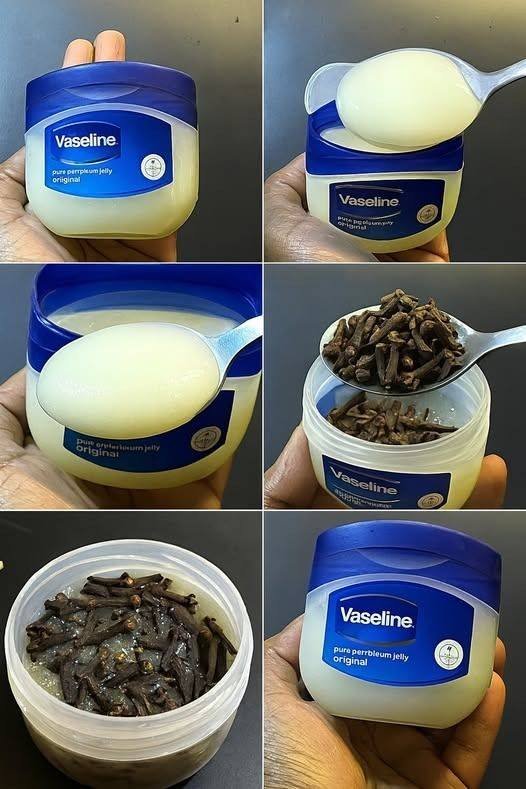
Many viral “secret hack” posts on social media claim that mixing cloves with petroleum jelly is a hidden remedy for everything from tooth pain to skin problems. But it’s important to understand what is true, what’s exaggerated, and what can be unsafe before trying something like this. Here’s a responsible, detailed breakdown:
🌿 What Cloves Are (and What They Do)
Cloves are the dried flower buds of the Syzygium aromaticum tree and have been used in traditional medicine for centuries. The active compound in clove oil is eugenol, which has:
✅ Natural analgesic (pain‑relieving) effects
✅ Antibacterial properties
✅ Anti‑inflammatory effects
Because of this, clove oil is often used (in very small amounts) to help with:
- Toothache relief
- Minor gum irritation
- Digestive discomfort (when diluted properly)
However, pure clove oil is very strong — undiluted it can irritate or burn skin and mucous membranes.
🧴 Why People Mix Cloves with Petroleum Jelly
Petroleum jelly (like Vaseline) is an inert, oily substance that:
- Doesn’t absorb much into the skin
- Creates a protective barrier
- Helps anchor other ingredients where they’re applied
Some people think mixing crushed cloves or clove oil with petroleum jelly will:
🔹 Hold clove oil in place
🔹 Make the mixture less irritating
🔹 Provide extended contact for pain relief
But this doesn’t make it a secret cure — it just creates a way to apply clove oil more slowly.
⚠️ Important Safety Notes
❌ 1. Do not apply clove oil‑based mixtures directly onto broken skin
Pure essential oils are concentrated and can:
- Burn or blister skin
- Cause allergic reactions
- Irritate delicate areas like the mouth or genitals
Mixing clove oil with petroleum jelly does not guarantee safety unless properly diluted.
❌ 2. Don’t use on oral tissues without guidance
Putting a clove/petroleum jelly mix against teeth or gums can:
- Damage soft tissues
- Cause numbness or irritation
- Interact with dental infections incorrectly
Dentists recommend clove oil in tiny, diluted amounts only for short‑term toothache relief — and not as a substitute for proper dental care.
❌ 3. It’s not a cure for serious conditions
This mixture will not cure infections, eliminate cavities, prevent heart disease, or remove toxins — despite some clickbait headlines. Those are false, exaggerated claims with no scientific backing.
🧠 What Clove Oil Can Be Used For (Safely)
If you want to use cloves in a way supported by evidence and safety advice:
✅ For mild toothache
- Mix 1 drop of clove oil with a teaspoon of carrier oil (like coconut oil).
- Dip a cotton swab and lightly touch the sore area for a few minutes.
- Rinse after use.
Never use more than a tiny amount, and avoid swallowing.
✅ For minor skin application
Mix one or two drops of clove oil into a large amount of neutral carrier oil OR lotion, not petroleum jelly, and do a patch test 24 hours before wider use.
🧪 Why Petroleum Jelly Isn’t the Best Base
Petroleum jelly is great for:
- Sealing in moisture
- Protecting chapped skin
…but it is not a good carrier for essential oils if your goal is absorption. Oils like:
- Coconut oil
- Sweet almond oil
- Olive oil
are better for diluting essential oils for topical use.
🧾 Bottom Line — Truth vs. Clickbait
Truth:
🌿 Cloves contain compounds with mild pain‑relieving and antibacterial properties.
🧴 Petroleum jelly can hold topical mixtures in place.
Exaggeration / Myth:
❌ This isn’t some secret remedy no one will tell you.
❌ It won’t cure serious conditions.
❌ It can cause irritation if misused.
Safe takeaway:
If you use clove oil very sparingly and properly diluted, it can help with minor toothache or surface irritation. But always be cautious with essential oils and avoid applying strong mixtures directly to sensitive areas.
If you tell me what you were hoping it helps with (e.g., toothache, skin irritation, bug bites), I can give you a safe step‑by‑step method tailored to that specific issue.