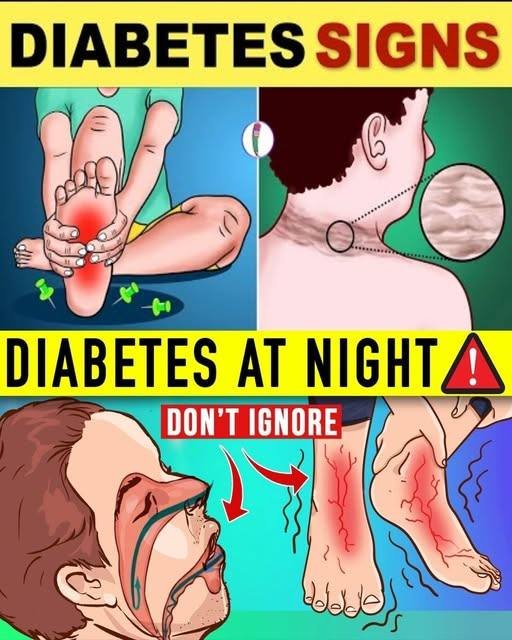
Nighttime symptoms can sometimes be early warning signs of Diabetes Mellitus—especially when blood sugar levels aren’t well controlled. While one symptom alone doesn’t confirm anything, repeated patterns at night are worth paying attention to.
Here are 7 important nighttime signs and why they matter:
🌙 1. Frequent urination at night (nocturia)
Why it happens: High blood sugar forces your kidneys to work harder, producing more urine.
Why it matters: It’s one of the most common early signs of diabetes.
💧 2. Excessive thirst at night
Why it happens: Losing fluids through frequent urination leads to dehydration.
Why it matters: A cycle of thirst + urination can signal high glucose levels.
😴 3. Night sweats
Why it happens: Often linked to low blood sugar (especially if on medication).
Why it matters: Could indicate nighttime hypoglycemia, which can be dangerous.
🍬 4. Sudden hunger or waking up hungry
Why it happens: Blood sugar drops overnight, triggering hunger signals.
Why it matters: May point to unstable glucose control.
💤 5. Restless sleep or insomnia
Why it happens: Fluctuating sugar levels can disrupt your sleep cycle.
Why it matters: Poor sleep can worsen insulin resistance over time.
🦵 6. Tingling or burning in feet (at night)
Why it happens: Nerve damage (diabetic neuropathy) becomes more noticeable at rest.
Why it matters: This can be an early complication if diabetes is uncontrolled.
👁️ 7. Blurred vision at night
Why it happens: High blood sugar can temporarily affect the eye’s lens.
Why it matters: Persistent issues could signal eye complications.
⚠️ When to take it seriously:
- Symptoms happen regularly, not just once
- You have risk factors (family history, weight, low activity)
- Symptoms are getting worse
✅ What to do:
- Check fasting blood sugar levels
- Get an HbA1c test (long-term sugar levels)
- Consult a doctor for proper diagnosis
💡 Bottom line: These signs don’t confirm diabetes on their own, but they are early warning signals your body shouldn’t ignore. Catching it early makes a huge difference in preventing complications.
If you want, I can help you check your risk level with a quick self-assessment or suggest a simple daily routine to keep blood sugar stable.