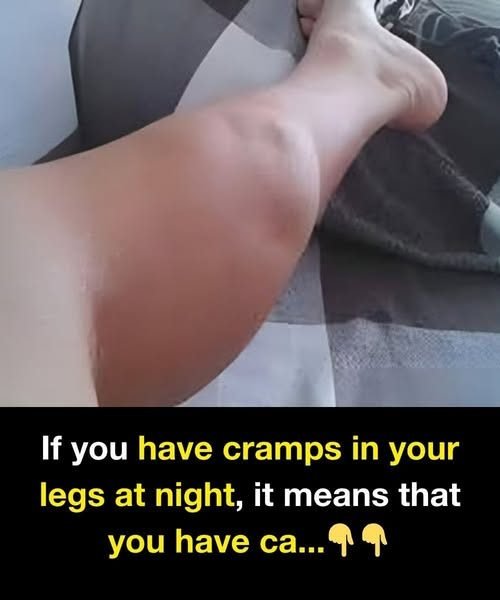
Leg cramps at night—also called nocturnal leg cramps—are common, especially in adults and older adults. They’re usually harmless, but sometimes they signal underlying issues. Here’s a detailed breakdown of what they could mean:
⚡ Why Leg Cramps Happen at Night
1. Electrolyte Imbalances
- Low levels of magnesium, potassium, or calcium
- Can affect muscle contraction and relaxation
- Often caused by dehydration, certain medications, or diet deficiencies
2. Dehydration
- Not drinking enough fluids during the day
- Muscles become more prone to involuntary contractions
3. Muscle Fatigue
- Overuse of leg muscles during the day (long walks, standing, exercise)
- Muscles tighten overnight and cramp
4. Poor Circulation
- Conditions like peripheral artery disease can reduce blood flow
- Muscles may cramp when they’re not getting enough oxygen
5. Medications
- Some diuretics, statins, or blood pressure drugs can trigger cramps
6. Medical Conditions
- Diabetes, thyroid disorders, nerve damage, or spinal issues
- Chronic leg cramps may warrant a doctor’s check
7. Pregnancy
- Leg cramps are common, especially in the second and third trimesters
🏃 How to Prevent Night Leg Cramps
- Stretch Before Bed
- Calf stretches, hamstring stretches, or gentle yoga
- Stay Hydrated
- Drink water throughout the day
- Check Electrolytes
- Include magnesium, potassium, and calcium-rich foods
- Examples: bananas, leafy greens, nuts, dairy
- Avoid Overuse
- Don’t over-exercise right before sleep
- Foot Position
- Avoid pointing toes downward while sleeping—flex them gently
⚠️ When to See a Doctor
- Cramps are severe, frequent, or persistent
- Associated with swelling, redness, numbness, or weakness
- Could indicate circulation problems or nerve issues
🔑 Bottom Line
Most night leg cramps are benign and linked to dehydration, muscle fatigue, or low electrolytes. Regular stretching, hydration, and balanced nutrition often help—but persistent issues should be evaluated medically.
If you want, I can make a step-by-step nightly routine to prevent leg cramps, including stretches, foods, and hydration tips that really work.