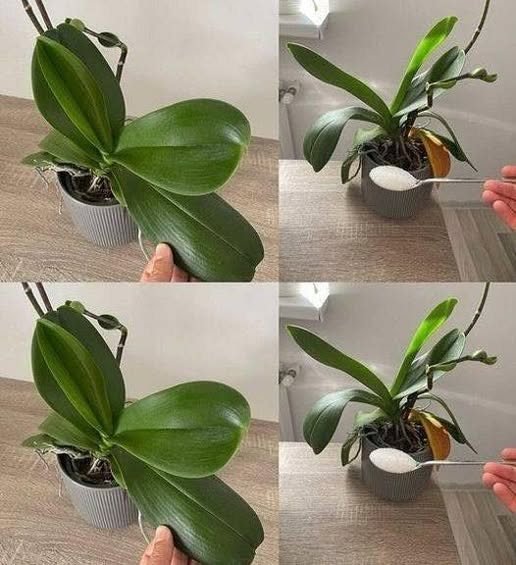
That “just 1 tablespoon” claim is clickbait and misleading—no single dose of fertilizer will make orchids bloom nonstop. Orchids have natural bloom cycles, and over-fertilizing can damage the plant. What actually works is a consistent, balanced fertilization strategy. Here’s the real, detailed guidance:
🌸 Orchid Fertilizer Tips for Continuous Blooms
🧪 Understanding Orchid Nutrition
Orchids (like Orchid) are epiphytes in nature, growing on trees with minimal soil. They need:
- Nitrogen (N) – for leaves and roots
- Phosphorus (P) – encourages flowering
- Potassium (K) – supports overall plant health
- Micronutrients – magnesium, calcium, iron
The “1 tablespoon magic” doesn’t account for dilution, plant size, or nutrient type—too much can burn roots.
✅ Safe Fertilizing Method
1. Use a balanced fertilizer
- 20-20-20 (all-purpose) or 10-30-20 (for flowering) are common
- Designed for orchids, not for general garden plants
2. Dilute properly
- ¼ to ½ of label strength
- Fertilize weekly or bi-weekly instead of one big dose
3. Follow the “weakly, weekly” rule
- Light, consistent feeding is better than occasional heavy doses
- Promotes healthy growth and encourages blooms over time
🌿 Tips to Encourage Blooming
- Light: Bright but indirect sunlight
- Temperature: Some orchids need a slight drop in night temperature to trigger blooms
- Water: Keep roots moist but not waterlogged
- Rest period: Orchids often naturally pause after blooming—don’t force them with excess fertilizer
⚠️ What to Avoid
- Using a single tablespoon of concentrated fertilizer directly on roots
- Expecting orchids to bloom nonstop
- Ignoring light, water, and temperature needs
🔑 Takeaway
Orchid blooms depend on careful, regular feeding, proper light, and respect for their natural cycle. There’s no shortcut, but steady attention yields long-lasting, healthy flowers.
If you want, I can make a complete monthly orchid fertilizing schedule with specific doses and timings to maximize blooms safely throughout the year. This is far more effective than any “1 tablespoon” trick.