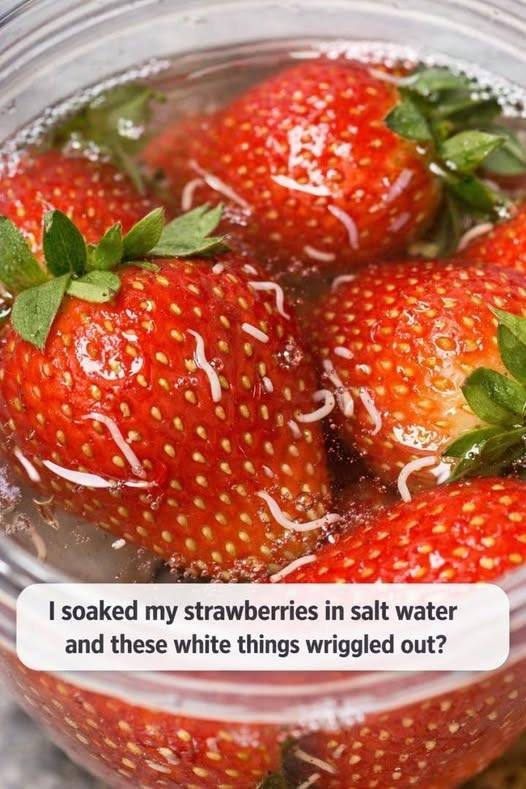
🍓 Why White Worm-Like Things Come Out of Strawberries in Salt Water
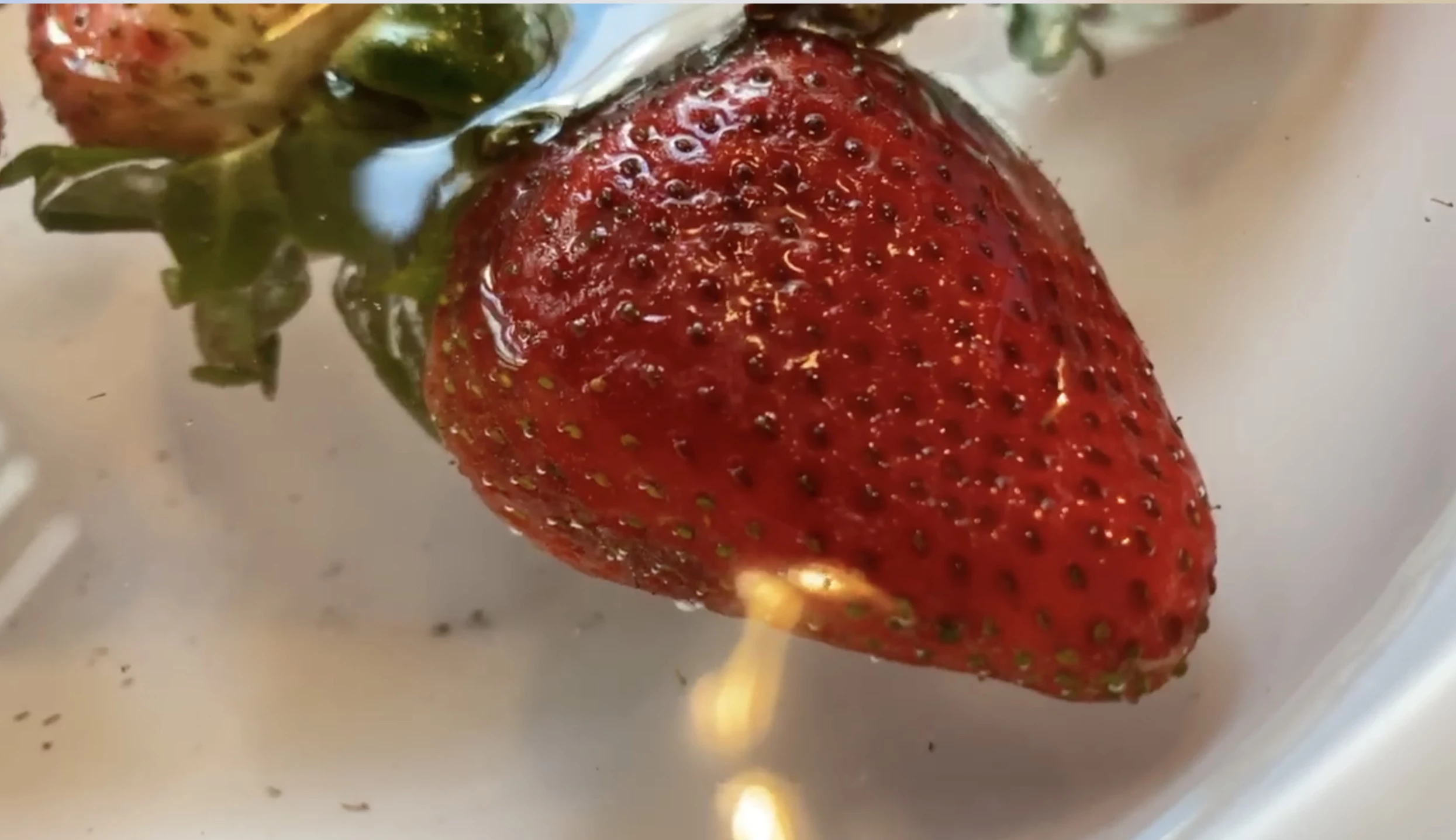


If you soaked strawberries in salt water and saw tiny white worm-like things wriggling out, they are usually small insect larvae that were already inside or on the fruit. This phenomenon became popular online after many people tried the salt-water strawberry test.
🐛 What Are Those White Worms?
Most commonly they are larvae of tiny fruit flies, especially the spotted wing drosophila (a small fruit fly that lays eggs inside soft fruits).
- The adult fly lays eggs inside ripening fruit.
- The eggs hatch into tiny white larvae.
- When strawberries are soaked in salt water, the larvae come out of the fruit.
These larvae are usually 2–4 mm long and look like tiny white worms.
🧂 Why Salt Water Makes Them Come Out
Salt water changes the environment around the larvae.
- The salt irritates them.
- They try to escape the fruit.
- As a result, they crawl out into the water where you can see them.
A typical mixture used in viral videos is:
- 1 cup water
- 1 teaspoon salt
- Soak for 5–10 minutes
🍓 Are the Strawberries Unsafe to Eat?
In most cases, no.
- These larvae are not harmful to humans.
- If you’ve eaten strawberries before without soaking them, you may have accidentally eaten tiny larvae, which is common with many fruits.
However:
- Always wash fruits well.
- If the fruit looks rotten, mushy, or heavily infested, it’s better to discard it.
🧼 Best Way to Clean Strawberries
- Rinse under running cold water.
- Optional: soak in salt water or vinegar water for 5 minutes.
- Rinse again with clean water.
- Pat dry before storing.
This helps remove dirt, pesticides, and small insects.
✅ Important:
Seeing larvae doesn’t mean the fruit is dirty or unsafe—it’s simply a sign that fruit flies laid eggs in the fruit while it was growing, which can happen even in organic farms.
If you want, I can also explain:
- Why strawberries have tiny holes that attract insects 🍓
- The safest way to remove pesticides from fruits and vegetables
- Which fruits are most likely to contain hidden larvae.