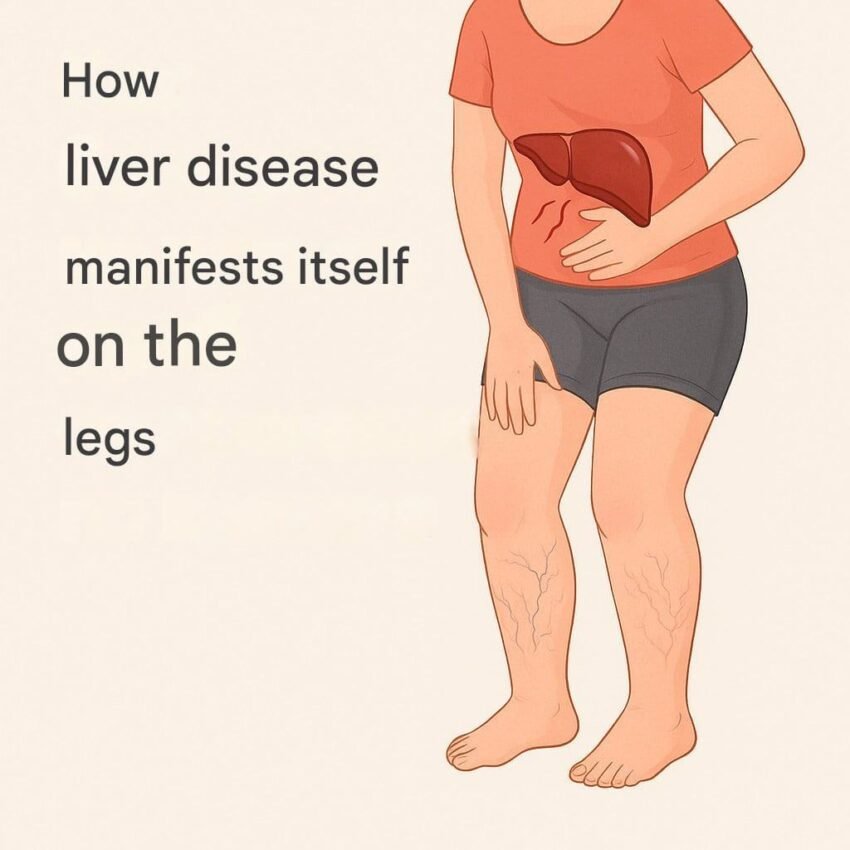
Liver disease can show up in the legs in several fairly recognizable ways, mostly because the liver plays a key role in protein production, fluid balance, and hormone metabolism. When it’s not working properly (for example in cirrhosis or advanced hepatitis), those systems get disrupted and the lower limbs are often affected early or noticeably.
Here are the main ways it can manifest in the legs:
1) Swelling (leg and ankle edema)
This is the most common sign.
- Usually starts around the ankles and lower legs
- Often pitting edema (if you press the skin, it leaves an indentation)
- Worse in the evening or after standing
- Caused by low albumin (a protein made by the liver) and fluid leakage from blood vessels
In more advanced cases, both legs can become significantly swollen and tight.
2) Skin tightness and shiny skin
As fluid builds up:
- The skin may look stretched and shiny
- Legs may feel heavy or uncomfortable
- Shoes or socks may start to feel tight suddenly
3) Easy bruising and purple discoloration
The liver produces clotting factors, so when it’s impaired:
- Small bumps can cause large bruises
- Purple or dark patches may appear on the lower legs
- Bruises may take longer to heal
4) Itching (especially lower legs)
Liver dysfunction can cause bile salts to build up in the blood:
- Leads to persistent itching (pruritus)
- Often worse at night
- Common on shins, ankles, and feet
- Scratching may cause visible scratch marks or thickened skin
5) Spider veins and visible vessels
Although more common on the upper body, they can also appear in the legs:
- Small, red spider-like blood vessels under the skin
- Related to increased estrogen levels and vascular changes in liver disease
6) Muscle wasting and weakness
In chronic liver disease:
- Thigh and calf muscles may gradually shrink
- Legs can look thin despite swelling from fluid
- Walking or climbing stairs may become harder
7) Darkening or color changes in skin
Some people develop:
- Brownish or bronze discoloration around ankles
- Patchy pigmentation changes due to circulation and hormone imbalance
Important context
Leg symptoms alone don’t confirm liver disease. Similar signs can also occur with:
- Heart failure
- Kidney disease
- Venous insufficiency (varicose vein problems)
- Lymphatic blockage
When it becomes more concerning
Seek medical evaluation if leg swelling is accompanied by:
- Yellowing of eyes/skin (jaundice)
- Abdominal swelling
- Confusion or extreme fatigue
- Unexplained bruising or bleeding
If you want, describe the specific symptoms you’re seeing (swelling, color changes, pain, one leg or both), and I can help you narrow down what’s more likely and what usually gets checked first.