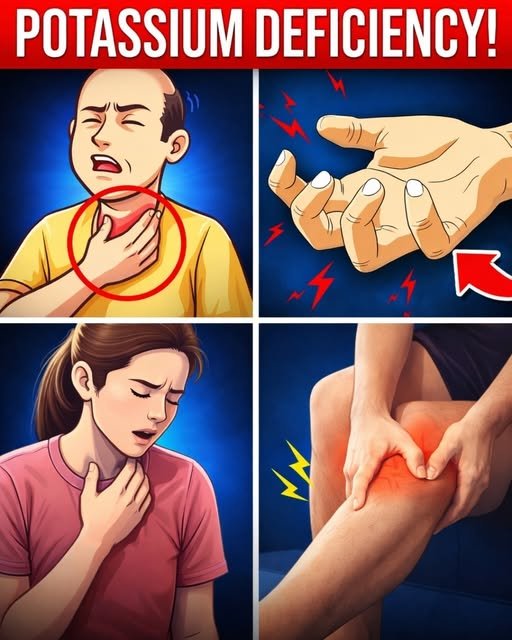
Low potassium—called Hypokalemia—can affect muscles, nerves, and the heart. Symptoms can be mild at first but may become serious if levels drop too low.
Here are 11 common warning signs to watch for:
⚠️ 1. Muscle Weakness
- Feeling unusually weak, especially in legs
- Trouble climbing stairs or lifting things
🦵 2. Muscle Cramps or Spasms
- Painful cramps, often in calves
- Twitching muscles
😴 3. Fatigue
- Constant tiredness even after rest
- Low energy levels
❤️ 4. Irregular Heartbeat (Palpitations)
- Skipped beats or fluttering feeling
- In severe cases, dangerous rhythm problems
🌬️ 5. Shortness of Breath
- Weak muscles can affect breathing
- Feels harder to take deep breaths
🧠 6. Tingling or Numbness
- Pins-and-needles sensation
- Usually in hands, feet, or face
🚽 7. Constipation
- Slowed digestion due to weak intestinal muscles
💧 8. Excessive Thirst & Urination
- Electrolyte imbalance affects fluid control
🤢 9. Nausea or Vomiting
- Digestive system disruption
🧍 10. Dizziness or Lightheadedness
- Especially when standing up
- Can be linked to low blood pressure
🫀 11. Severe Cases: Paralysis or Heart Issues
- Extreme muscle weakness
- Risk of serious heart complications (medical emergency)
⚠️ Common Causes
- Not eating enough potassium-rich foods
- Excess sweating (hot climates, workouts)
- Vomiting or diarrhea
- Certain medications (like diuretics)
- Kidney or hormonal disorders
🥑 Potassium-Rich Foods
Include more:
- Bananas
- Spinach
- Potatoes
- Avocados
- Coconut water
- Lentils
🚨 When to See a Doctor
- If you have heart palpitations, severe weakness, or breathing issues
- If symptoms persist or worsen
- Blood test is needed to confirm potassium levels
💡 Important Note
Don’t self-treat with supplements without medical advice—too much potassium can also be dangerous.
If you want, I can help you create a diet plan to naturally boost potassium or explain how quickly levels can be restored safely.