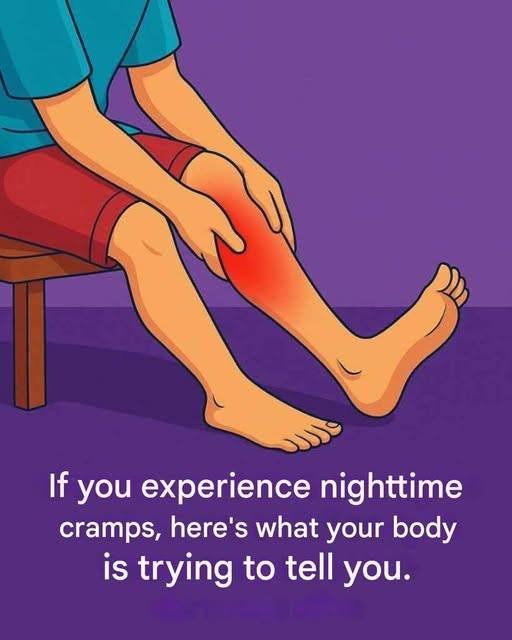
Nighttime cramps—often sudden, painful muscle contractions in your calves, feet, or thighs—are very common, especially in adults. They can disrupt sleep and leave you stiff in the morning. Here’s a detailed look at why they happen and how to prevent them naturally:
🦵 Why Nighttime Cramps Happen
1. Muscle Fatigue or Overuse
- Exercising intensely or standing for long periods can strain muscles.
- Fatigued muscles are more prone to involuntary contractions during sleep.
2. Dehydration
- Muscles need adequate fluid and electrolytes (sodium, potassium, magnesium, calcium) to function.
- Low hydration can trigger cramps, especially at night when fluid intake is lower.
3. Electrolyte Imbalance
- Low levels of magnesium, potassium, or calcium can disrupt normal muscle contractions.
- Common in people who sweat a lot, follow restrictive diets, or take certain medications (like diuretics).
4. Poor Circulation
- Sitting or lying in awkward positions may reduce blood flow to muscles, triggering cramps.
5. Medical Conditions & Medications
- Conditions like diabetes, thyroid disorders, or nerve problems can increase cramp frequency.
- Some medications (statins, diuretics) may also contribute.
🌿 Natural Ways to Prevent Nighttime Cramps
1. Stretch Before Bed
- Gentle calf and hamstring stretches before sleep can relax muscles.
- Examples:
- Calf stretch against the wall
- Seated hamstring stretch
2. Stay Hydrated
- Drink enough water during the day.
- Include electrolyte-rich foods: bananas, sweet potatoes, spinach, yogurt.
3. Magnesium & Potassium
- Magnesium-rich foods: almonds, pumpkin seeds, spinach
- Potassium-rich foods: bananas, avocados, potatoes
- Supplements may help if diet is insufficient (consult a doctor first)
4. Warm Compress or Bath
- Applying a warm towel or heating pad to cramped muscles relaxes tight fibers.
- A warm bath before bed can prevent muscle tension.
5. Foot & Calf Position
- Avoid pointing toes downward for long periods while sleeping.
- Slightly flexing feet with a pillow under calves can reduce cramp risk.
6. Regular Exercise
- Light to moderate daily activity keeps muscles strong and less prone to sudden contractions.
- Avoid excessive or high-intensity workouts late at night.
7. Massage
- Gently massaging calves and feet before bed improves circulation and relaxes muscles.
⚠️ When to See a Doctor
- Cramps are frequent, severe, or persistent
- Associated with swelling, redness, or numbness
- Could indicate an underlying medical condition that needs attention
💡 Quick Nighttime Cramp Relief
- Stand up and gently walk or stretch the cramped muscle
- Massage the area while applying warmth
- Drink a small glass of water with a pinch of salt if dehydrated
Nighttime cramps are usually preventable with hydration, stretching, and proper nutrition.
I can also make a nighttime routine checklist that naturally reduces cramps and promotes better sleep if you want.
Do you want me to create that?