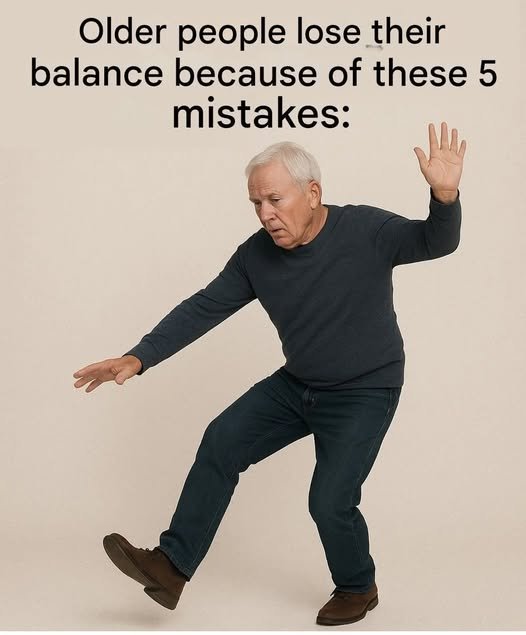
Loss of balance in older adults is common—but it’s often not just “aging.” In many cases, it’s caused or worsened by avoidable habits and health issues. Here are 5 key mistakes that can increase the risk of imbalance and falls:
⚠️ 1. Not Staying Physically Active
- Avoiding movement leads to muscle weakness, especially in the legs and core.
- Weak muscles = less stability and slower reaction time.
👉 Simple exercises like walking or Tai Chi can significantly improve balance.
👟 2. Wearing Improper Footwear
- Slippers, loose sandals, or worn-out shoes reduce grip and support.
- Walking barefoot on smooth floors also increases fall risk.
👉 Choose non-slip, supportive shoes even at home.
💊 3. Ignoring Medication Side Effects
- Some medications (especially for blood pressure, sleep, or anxiety) can cause dizziness or drowsiness.
- This increases fall risk without people realizing it.
👉 Always review medications with a doctor or pharmacist.
🥤 4. Dehydration and Poor Nutrition
- Low fluid intake can cause dizziness and low blood pressure.
- Lack of key nutrients (like vitamin D, B12) affects nerve and muscle function.
👁️ 5. Neglecting Vision and Ear Health
- Poor eyesight or inner ear issues affect spatial awareness and balance.
- Conditions like Vertigo can make standing or walking unstable.
👉 Regular eye and hearing checkups are essential.
🟢 Bonus: Hidden Risk
- Cluttered homes, loose rugs, and poor lighting also increase fall risk—even if balance is okay.
💡 Key Takeaway
Balance problems in older adults are often linked to lifestyle and health habits, not just age. Fixing these 5 mistakes can:
- Improve stability
- Prevent dangerous falls
- Increase confidence in daily movement
If you want, I can create a simple daily 5-minute balance routine for seniors that’s safe and very effective.