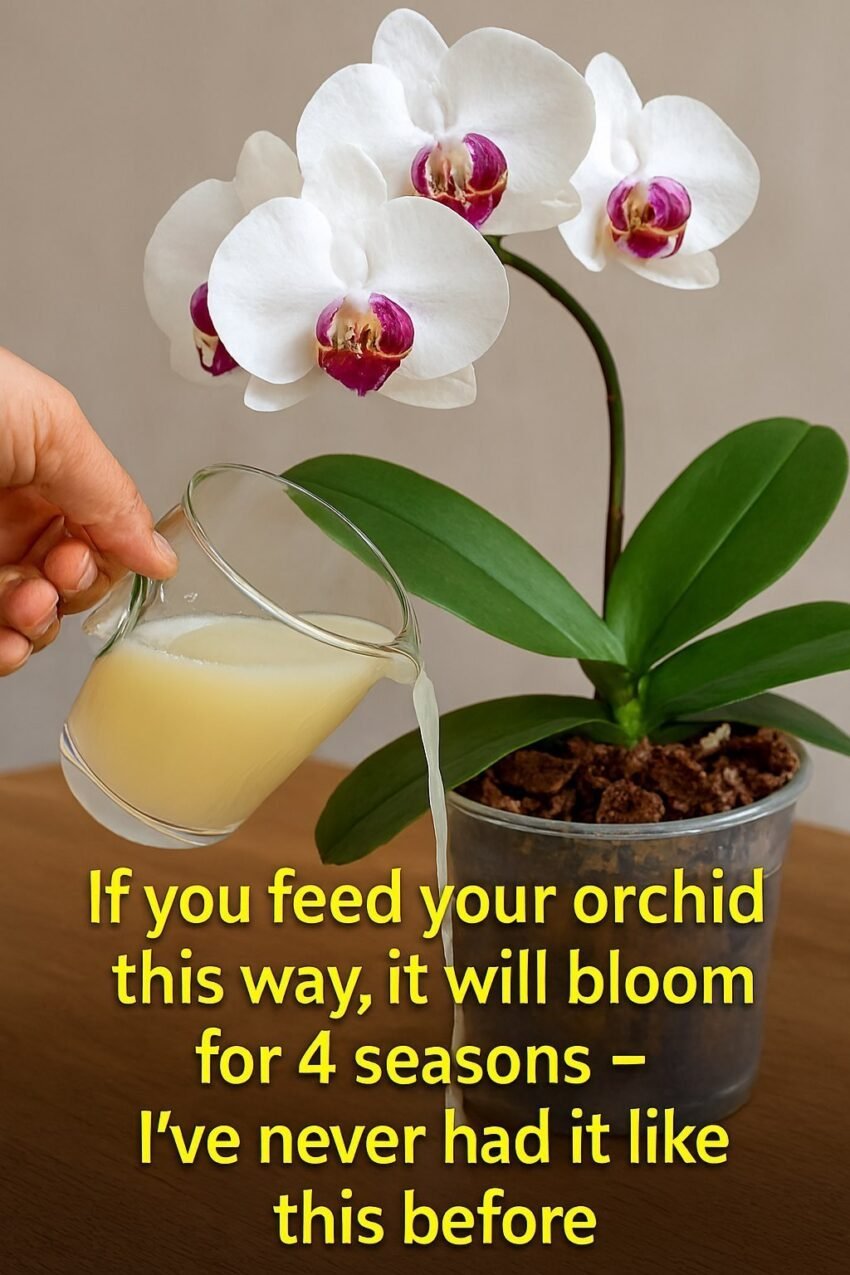
That claim is a bit exaggerated—no single “magic feed” will make an orchid bloom non-stop all year. But with the right nutrients and care routine, you can encourage longer, more frequent blooms. Here’s a realistic and effective method:
🌸 Why Orchids Stop Blooming
Most orchids (especially Phalaenopsis orchid) bloom in cycles. They need:
- Proper light
- Balanced feeding
- A slight temperature drop to trigger reblooming
🌿 Simple Natural Orchid Feed
Ingredients:
- 1 cup water
- 1–2 drops liquid fertilizer (balanced, like 20-20-20)
- Optional natural boost: a few drops of rice water or a tiny pinch of banana peel water
🥄 How to Use:
- Feed once every 2 weeks
- Pour gently over roots (not leaves or crown)
- Always use diluted solution (orchids hate strong fertilizer)
🍌 Alternative “Kitchen Boost” (Occasional)
- Soak a small piece of banana peel in water overnight
- Use that water once a month
👉 Provides potassium for flowering—but don’t overuse (can attract mold)
🌞 What REALLY Makes Orchids Bloom Again
1. Bright, Indirect Light
- Near a window, but no harsh direct sun
2. Temperature Drop at Night
- A drop of 5–7°C at night can trigger flowering
3. Proper Watering
- Water only when roots turn silvery/gray
- Overwatering = root rot (biggest killer)
4. Humidity
- Orchids love 40–60% humidity
❌ Common Mistakes
- Overfeeding (burns roots)
- Letting water sit in the crown (causes rot)
- Using thick soil instead of bark mix
💡 Key Takeaway
There’s no miracle trick—but a mix of:
- Light + proper feeding + temperature changes
👉 can lead to multiple blooming cycles per year, sometimes making it feel like “4 seasons of flowers.”
If you want, I can show you a step-by-step rebloom schedule to get your orchid flowering again within weeks.